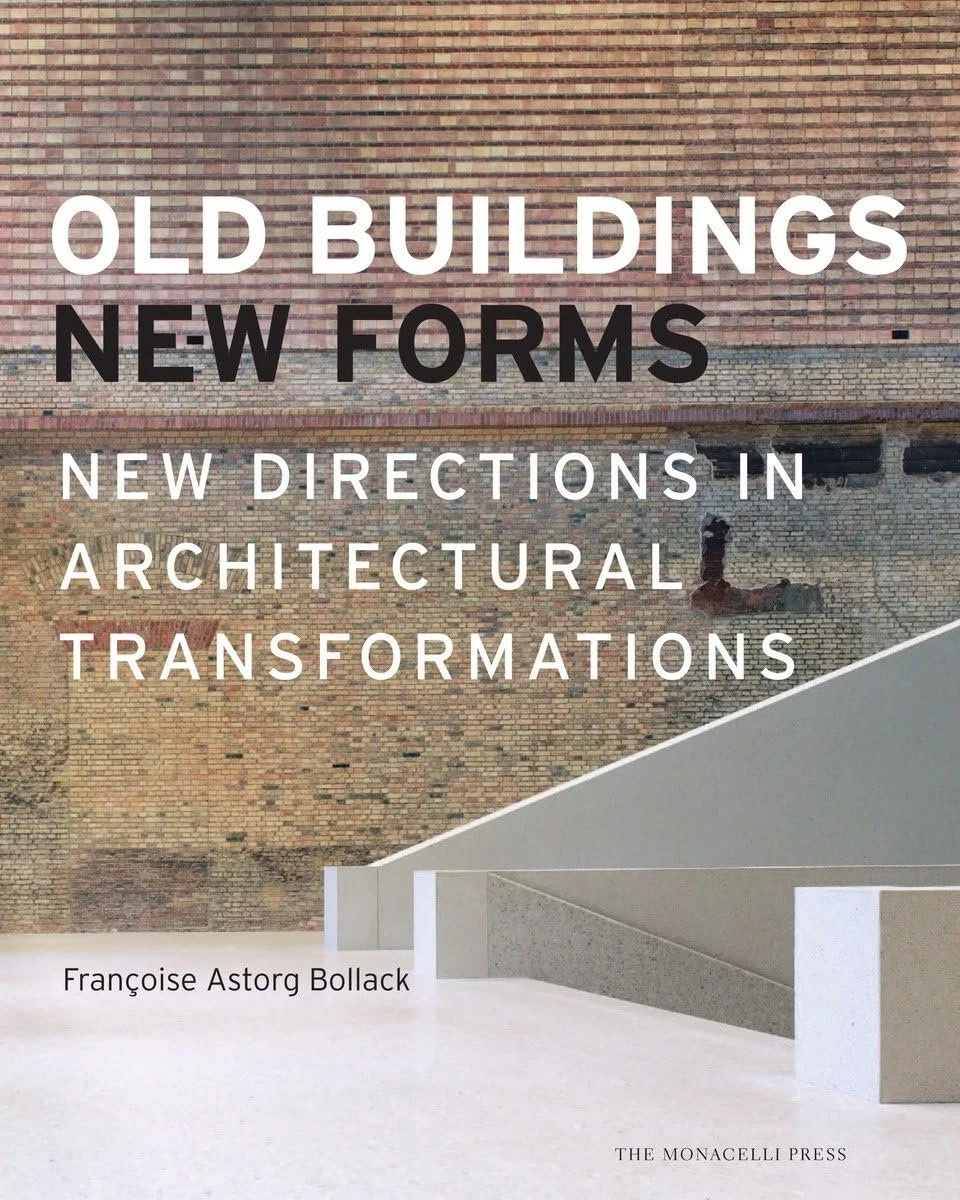
Concept versus Composition! New Directions in Architectural Transformations – A Taxonomy.
In May 2026, Françoise Astorg Bollack will participate in Carleton University’s conference From Adaptive Reuse to Adaptive Architecture, presenting a paper entitled Concept versus Composition! New Directions in Architectural Transformations – A Taxonomy.
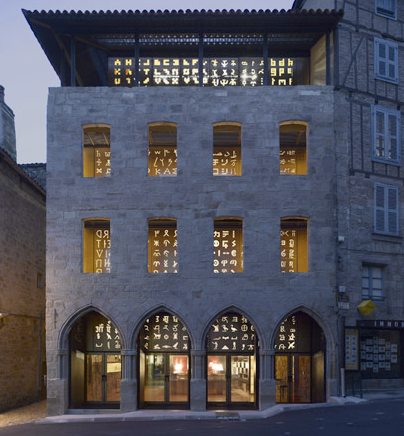
Museum of World Script, Figeac, France, Moatti & Rivière architects, Photo ©Moatti & Rivière
Françoise Bollack lectures at the General Society of Mechanics and Tradesmen
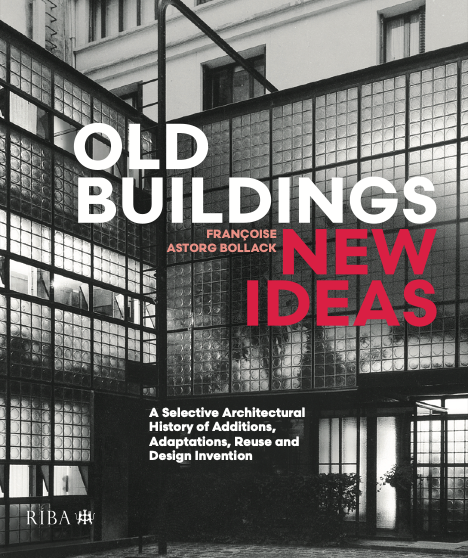
On March 29, 2024, Françoise Bollack lectures at the General Society of Mechanics and Tradesmen on her book Old Buildings – New Ideas: A Selective Architectural History of Additions, Adaptions, Reuse and Design Inventions.
Panel: Adaptive reuse challenges in NYC historic icons
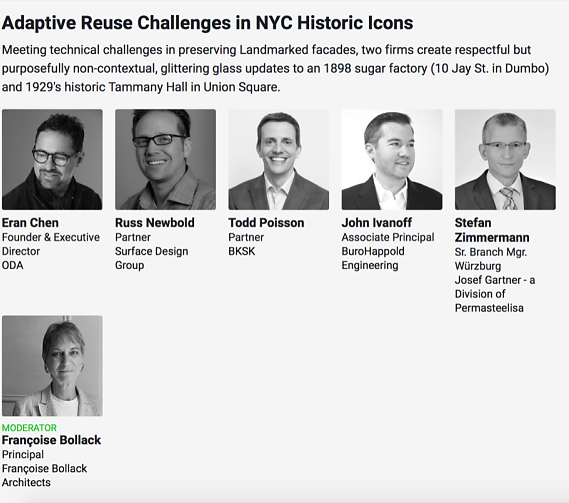
Françoise Bollack will moderate Adaptive Reuse Challenges in NYC Historic Icons, the closing panel at the FACADES+ conference. April 2, 4:15pm
Meeting technical challenges in preserving Landmarked facades, two firms create respectful but purposefully non-contextual, glittering glass updates to an 1898 sugar factory (10 Jay St. in Dumbo) and 1929's historic Tammany Hall in Union Square.
For more information visit facadesplus.com/events/nyc-agenda/
Six LGBT historic sites declared NYC Landmarks
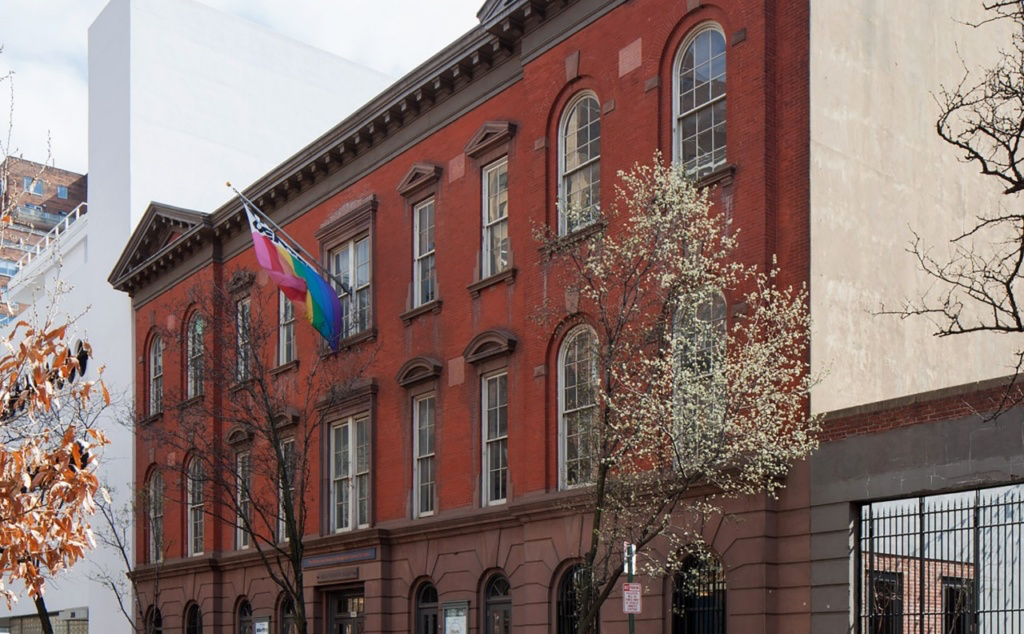
Manhattan's LGBT Center is now officially an Individual Landmark. (Courtesy NYC LGBT Historic Sites Project)
Location: 208 West 13th StreetManhattan Architect: Amnon Macvey
The Lesbian, Gay, Bisexual & Transgender Community Center has been an indispensable resource to hundreds of thousands of queer city dwellers since its opening in 1984. Colloquially known as “The Center,” the Italianate-style hub serves the community through health and wellness programs, political action, and social events. In 2001, the center brought on Françoise Bollack Architects to restore the facade and transform the former high school into its present-day program.
Leilah Stone
The Architect's Newspaper
Reflections on the art of the incomplete
Françoise Bollack's article, "Reflections on the art of the incomplete, " appears in the latest issue of Area.
Saving Place: 50 Years of New York City Landmarks features essay by Françoise
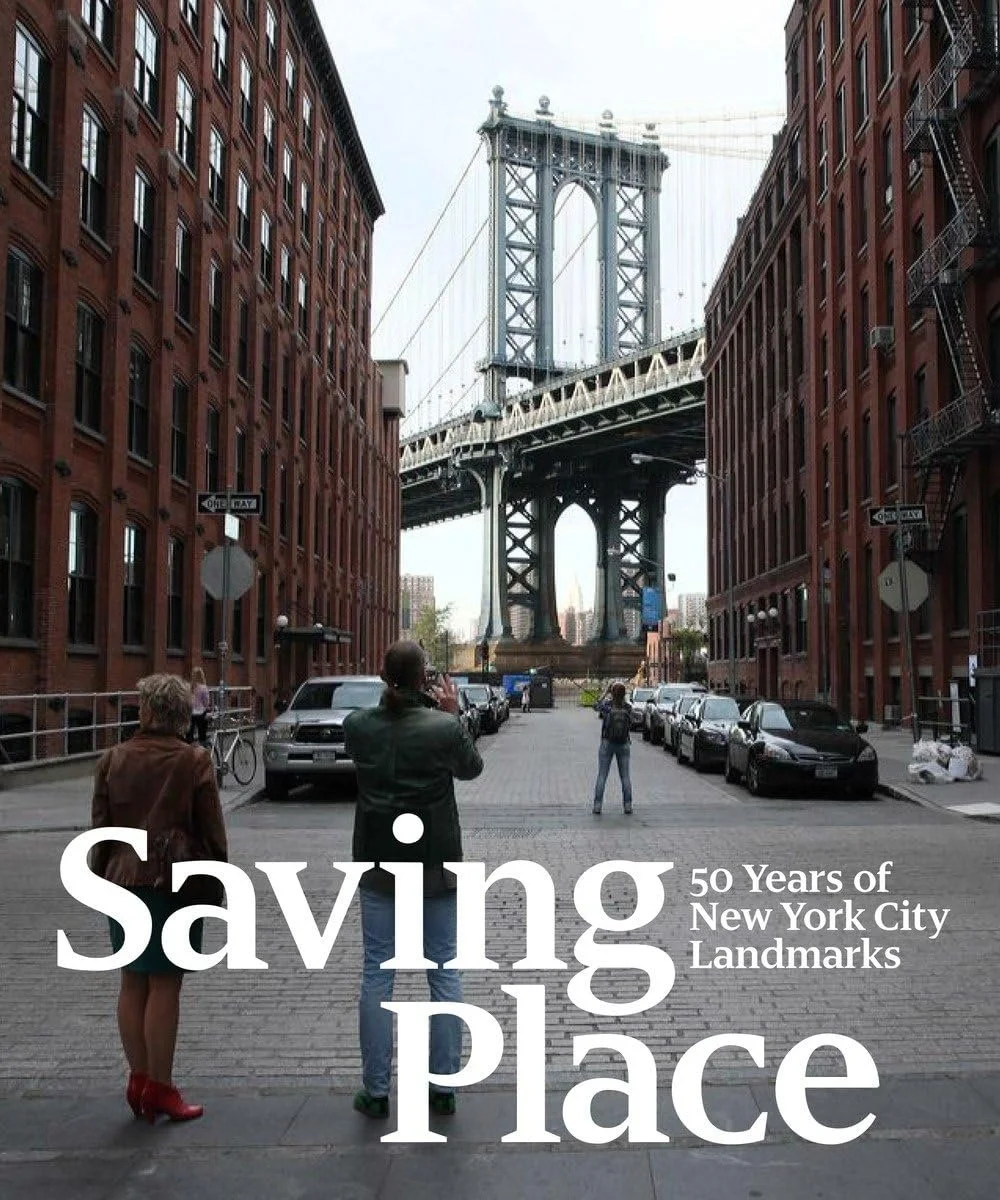
Françoise Bollack’s essay entitled “Defining Appropriateness: discusses the Landmarks Commission’s evolving notion of appropriateness through a few case studies with an emphasis on the collective aspect of the preservation culture in New York City. “In the end, this collective thinking, our collective work, has resulted in a rich and varied portfolio of alterations and additions that defy simple characterizations, an object lesson in the art of design in New York’s historic settings and a positive contribution to the city’s urban history.”
Françoise Bollack awarded the UMW Historic preservation book prize
The University of Mary Washington Center for Historic Preservation has awarded the 2014 Historic Preservation Book Prize to “Old Buildings New Forms: New Directions in Architectural Transformations” by Françoise Astorg Bollack.
“Bollack’s book is provocative for historic preservation in the United States and worldwide,” said Gary Stanton, chair of the jury and associate professor of historic preservation at UMW. “[The book] proposes ways of seeing, valuing and designing that not all readers will approve or appreciate. Yet the value of the discussion is not brought forward by a slow evolution of the language of rehabilitation and reuse, but by the articulation of contrasting active design concepts.”
The center awards the Historic Preservation Book Prize annually to a book that a jury deems has made the most significant contribution to the intellectual vitality of historic preservation in America.
Bollack is a registered architect with more than 30 years of experience in architectural design, historic preservation, adaptive reuse and interior design. Since 1981, she has been the principal of Françoise Bollack Architects in New York City. She is also an adjunct associate professor of architecture at Columbia University.
This year, the jury for the $500 prize also included Douglas Sanford, Hofer Professor of Early American Culture and Historic Preservation at the University of Mary Washington; Andrew Dolkart of the historic preservation program at Columbia University; Malcolm Cairns, professor of landscape architecture at Ball State University; and Lucy Lawliss, National Park Service Superintendent of Fredericksburg, Chancellorsville and Wilderness Battlefield Parks.
Four minutes on… Architectural transformations with Françoise Astorg Bollack, AIA
I prefer the expression “architectural transformations,” to the limited vision offered by “adaptive re-use,” “adaptive use,” and “re-purposing”—all recent expressions—because it places transformations of old buildings in a larger architectural context, one with a rich history available for study: from Andrea Palladio’s 1545 wrapping1 of a “modern” (i.e. Renaissance) loggia around the, by then outmoded, 15th-century buildings housing the law courts in Vicenza; to Michelangelo’s 1563–64 insertion of a Christian church into the ruined Baths of Diocletian in Rome; to Mount Vernon in Virginia, enlarged by George Washington in 1758 and 1774;2 and to the 1928 Maison de Verre in Paris where Pierre Chareau and Bernard Bijvoet inserted a modern residence under an 18th-century house (the tenant refused to move!).
Historically, architectural transformations cover the whole range of changes needed for buildings to survive. To continue being useful and culturally relevant, buildings are updated to satisfy new functions or a new architectural sensibility; they are enlarged, added to, or reconfigured, with the same uses or with different uses. These factors have always been in play, and buildings that last are buildings that adapt, one way or the other.
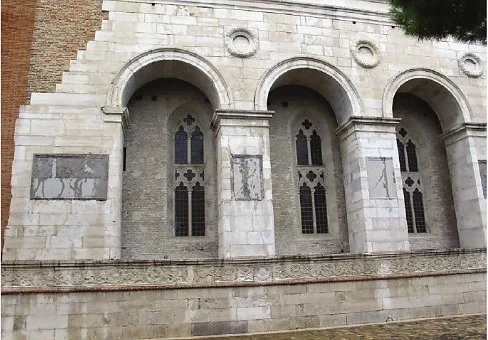
This side view of the Tempio Malatestiano shows the two time periods of the building: the gothic core and the Renaissance “wrap.” Image by Sailko (creativecommons.org/licenses/by-sa/3.0) via Wikimedia Commons
This side view of the Tempio Malatestiano shows the two time periods of the building: the gothic core and the Renaissance “wrap.” Image by Sailko (creativecommons.org/licenses/by-sa/3.0) via Wikimedia Commons
Histories of architecture are full of architectural trans- formations and many iconic buildings are additive buildings, even though they are rarely analyzed from this perspective in the history books. As in the case of the Maison the Verre, such buildings are often presented as wholly new, built in one single time period—what is missing from the story is a full analysis that allows us to learn from transformative strategies and their history. Another example, in The Architecture of the Renaissance (Routledge & Kegan Paul, 1978),3 Leonardo Benevolo describes Alberti’s 1450 design for the transformation of the church of San Francesco in Rimini into the Tempio Malatestiano: “He decided to surround the building with a masonry casing, detached from the original masonry along the sides, in order to free the rhythm of the arches from that of the windows behind them.” The illustrations consist of a plan and photos of the side, front, and a detail. The plan shows a partial “wrap” of the old structure with the new loggia. One is curious about the relation of the two, but the photographs offer no clues. Although it is fair to say that Alberti was trying to suppress the older building in order to achieve a contemporary expression, we don’t have to accept this point of view. It is time to look at such designs from a new perspective—the works will gain added significance and we might learn something!
Copyright © Françoise Astorg Bollack, March 2015.
Françoise Astorg Bollack, AIA, is principal of Françoise Bollack Architects in New York City and the author of Old Buildings—New Forms: New Direc- tions in Architectural Transformations. She presented a lecture sponsored by GraceHebert Architects at the LSU School of Architecture and the LSU Department of Interior Design on February 23, 2015.
1. For a suggested taxonomy of architectural transformations see Old Buildings—New Forms: New Direc- tions in Architectural Transformations, Franc?oise Astorg Bollack, the Monacelli Press, 2013.
2. For an interesting discussion of Washington’s interventions see “Reflections on Mount Vernon: A Declara- tion of Architecture” by Tom Killian in Material Culture: The Journal of the Pioneer America Society, Fall 2005. Vol. 37, No. 2, p.60–64.
3. First published in Italy in 1968 as Storia dell’Architettura del Rinascimento by Giuseppe Laterza e Figli
Françoise Bollack, “Old Buildings-New Forms: New Directions in Architectural Transformations”
Architect Françoise Bollack will lecture at the LSU School of Architecture and LSU School of Interior Design on February 23, 2015, at 5 p.m. in the LSU College of Art & Design Auditorium (room 103). Bollack’s lecture, “Old Buildings-New Forms: New Directions in Architectural Transformations,” examines a wide range of contemporary interventions, which add to and transform old buildings. The lecture is sponsored by GraceHebert Architects.
14 essential preservation books
Françoise Bollack's Old Building's New Forms was chosen by the National Trust for Historic Preservation as one of 14 essential books for 2014